





“Don’t forget your backpack.”
“Say thank you!”
“Start doing your homework now. No, seriously, now.”
“You forgot your lunch!”
If you’re an ADHD parent, directives and reminders like these are likely the soundtrack playing in the background of your home. And the fact that you’re here means you and your ADHDer are pretty over it. Your kids don’t enjoy constantly being told what to do. You definitely don’t enjoy constantly telling them. So everyone gets frustrated. And big feelings ensue.
Enter: declarative language, the simple trick that has been every speech therapist’s secret weapon forever—and is about to become yours, too! (I’ve seen it make a huge difference in my clients’ lives, improving the parent-child relationship almost immediately.)
In this post, I’ll explain what declarative language is and how it helps ADHD kids build executive function and self-regulation skills, then share some easy ways to start using it at home. If you’re running out of energy for the constant reminders, or worried that your child will be relying on you to help them get things done forever, it’s a must-read!
(By the way, I’m speaking directly to ADHD parents here because we often need this help the most, but these tips will benefit all kids!)
Executive Function & ADHD: An Overview
The Benefits of Declarative Language for Children with ADHD
Try It Out: Combine Imperative & Declarative Language with your ADHDer
Examples of Declarative Language

Executive Function & ADHD: An Overview
Before we talk about building executive function, we need to define it. Because the term gets thrown around quite a lot in the ADHD space, but it’s very rarely broken down.
Executive function is a set of 9 higher-level cognitive skills we all use to help manage daily life tasks. The 9 skills are:
-
- Inhibition: The ability to stop ourselves from doing things we shouldn’t.
- Self-Monitoring: The awareness of how our actions impact others.
- Cognitive Flexibility: The ability to move between situations as needed.
- Emotional Control: Regulating our emotions to be appropriate for the time and place.
- Initiation: The ability to begin a task independently.
- Working Memory: The type of memory needed to hold small amounts of information in mind in order to complete a task. (Important for following multi-step directions and sustaining attention.)
- Planning: The skill of thinking ahead to manage future demands
- Task-Monitoring: The ability to check work as we go, ensure we’re on track, and complete tasks accurately.
- Organization: The ability to keep track of our own belongings and materials.
Executive dysfunction is a hallmark of ADHD. So, if your ADHD child struggles in many of these areas, that makes sense. The good news is that, over time, ADHDers can strengthen their executive functioning. You can even do things to help them get there, like—you guessed it!—using declarative language.
What Is Declarative Language?
To really understand what declarative language is, you first need to understand its counterpart: imperative language.
Imperative language is any communication that requires a response. With this type of communication, one person is in control while the other is expected to provide an answer.
Examples of imperative language include:
Asking direct questions
- “What did you do at school today?”
- “What color is your shirt?”
- “How should you say goodbye to Grandma?”
Giving commands
- “Get your book and sit down, it’s time to read.”
- “Look at me when I’m talking.”
- “Give me the white socks.”
I’ll be the first to say that sometimes, imperative language is completely necessary. (“Get your shoes on! We have to go now!”) But, because it doesn’t leave any room for independent thinking, back-and-forth conversation, or shared enjoyment, it’s not the best way to strengthen our relationships with our kids, or help them develop the executive function skills we want them to have.
Declarative Language
Declarative language is different in that it does not require a response from the other person. The purpose of declarative language is to share information in such a way that, by doing so, you invite your child to engage with you, solve a problem, or respond to a given situation all on their own terms.
Most children (including children with ADHD) respond better to declarative language, so much so that when others around them use it, their communication typically increases!
When you use declarative language, you’re verbalizing your “internal” or “inner monologue,” so your child can hear and begin to understand how you think, feel, or are approaching a situation.
Examples of declarative language include:
- “I’m feeling…”
- “I noticed…”
- “I’m worried about…”
- “I’m wondering what would happen if…”
- “I’m thinking about…”
(Scroll for more in-depth examples at the end of this post!)
The Benefits of Declarative Language for Children with ADHD
#1 Declarative Language Promotes Self-Regulation
Declarative statements allow our children to “hear our thoughts,” which, in time, helps them learn to solve problems and self-regulate the way we do. This happens in stages: first, they hear us talk things through. Then, they begin to narrate their own activities out loud. And finally, their “narration” turns into their own inner voice (or monologue) as they begin processing situations internally.
Executive function skills involved in self-regulation:
- Self-monitoring
- Emotional control
Related article: 4 Strategies to Help Your ADHD Child Self-Regulate
#2 Declarative Language Builds Problem-Solving Skills
Do you remember being a child and thinking adults automatically knew what to do all the time?
(And, now that we are adults, isn’t that comical??)
As adults, we constantly solve problems in our own minds. But because they can’t hear our thought processes, our children don’t realize how much effort that takes. When you start problem-solving out loud in front of your child, you bring them into your thought process. (They may even surprise you with a solution from time to time!)
What does this look like in real life? You might say out loud while driving home,
“Oops, this road is closed up ahead. Instead of sitting in this traffic, I’m going to turn around and try a different route. But since we are going to be late, I probably won’t have time to cook the dinner I was planning. Let’s make pancakes since that will be faster. I will call Dad and ask him to start cooking.”
By externally voicing your internal thought processes, you show your child how to solve problems, stay calm under pressure, and be flexible.
Executive function skills involved in problem-solving:
- Cognitive flexibility
- Planning
- Emotional control
- Self-monitoring
#3 Declarative Language Encourages Curiosity & Social Wondering
Rather than teaching children to simply carry out our commands, declarative communication provides opportunities for them to use language in a more authentic way.
One aspect of social development that I work on with a lot of my clients is asking questions, which stems from the concept of social wondering. Many children can ask questions (e.g., who, what, where) when they are directly prompted—but many won’t do so otherwise. In this case, the underlying skill we need to work on is “social wondering,” or wondering about the other person. (If you aren’t wondering anything, you don’t have any reason to ask questions!)
Using declarative language encourages ADHDers to build the skill of social wondering. In time, they become more curious about others and how they think, so asking questions comes more naturally. This is a social win because when questions come more naturally, conversations flow more easily, and sometimes, friendships grow as a result.
Related article: ADHD and Friendship. 5 Tips for Parents.
Executive function skills involved in social wondering:
- Self-monitoring
- Cognitive flexibility
- Initiation
#4 Declarative Language Promotes Social Reciprocity
When an interaction relies mostly on imperative language, there is a lot of pressure on the other person. Think of a job interview where someone constantly asks you direct questions. Exhausting, right? And it definitely doesn’t feel like a two-way street.
Declarative language invites a more equal dynamic, which means the interaction can be a shared experience rather than one-sided. This allows for social exchange via conversational back-and-forth, also known as Social Reciprocity.
Executive function skills involved in social reciprocity:
- Self-monitoring
- Cognitive flexibility
- Emotional control
Examples of Declarative Language
There are so many ways to incorporate declarative language into your days:
Share your own feelings or experiences:
- “I’m feeling happy because…”
- “I loved that movie. My favorite part was…”
- “I’m hungry for pizza.”
- “I love ____ with you!”
- “I am worried about…”
- “When… happens, I don’t like it.”
Comment on or describe things:
- “My day was so wild! I was late to school because there was so much traffic!”
- “Wow, the sky is pink and orange tonight.”
- “It smells like/sounds like/looks like…”
Build self-confidence through purposeful praise:
- “You are great at…”
- “I love how you listened to Grandpa’s story.”
Share think-aloud and problem-solving statements:
- “I’m thinking about…”
- “I noticed…”
- “I’m wondering what would happen if…”
- “I’m curious about why the grass is so muddy this morning.”
- “Last time we tried ____, it didn’t turn out very well! This time, I am going to try ____.”
- “I forgot about…”
- “I realized..”
(Think-aloud and problem-solving statements are my favorite for ADHDers!)
Try It Out: Combine Imperative and Declarative Language with your ADHDer
If you’re reading this post and realizing you’re “guilty” of using a lot of imperative language with your ADHDer—or not using enough declarative language—please don’t stress. Imperative language isn’t inherently bad. (And you’re still a great parent if you use it!)
When I see parents using a lot of imperative language with their kids, it’s typically because they’re trying their best to demonstrate what their child knows or help them be successful communicators. In other words, their intention is great!
Also, in many situations, imperative language is completely appropriate and necessary. Let’s be honest: if you need to get out the door by 7:15 am with all the lunch boxes, water bottles, signed permission slips, winter gear, and soccer uniforms ready to go, pausing and saying, “Hmmm…I noticed you forgot something…” then waiting for your child to fill in the blank on their own and then go find their forgotten items is just not going to happen. And that’s okay!
If you find yourself in the habit of using imperative language (or giving constant directives and reminders) more than you want to, see if you can use even one or two declarative statements a day. Small, intentional changes add up over time. And the examples above can help you get there.
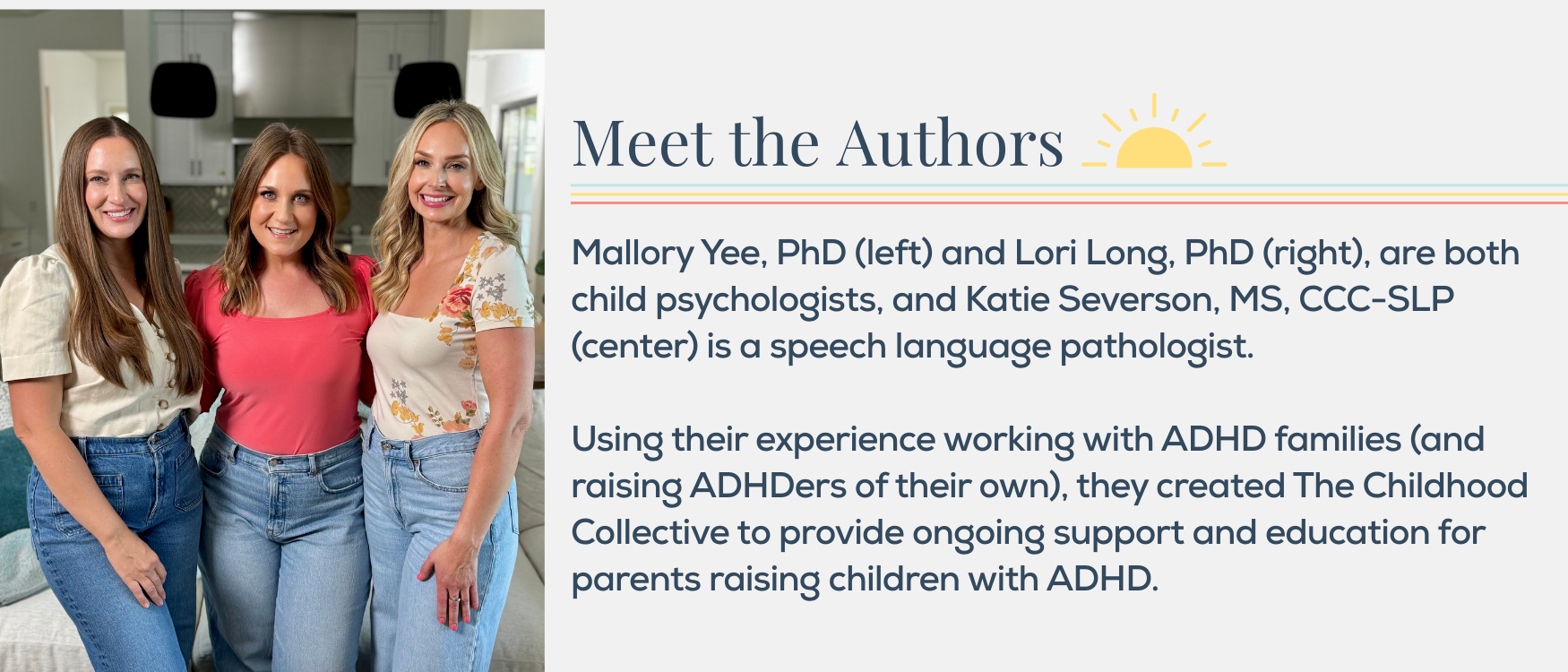
Have a beautiful week,
Katie
Research and References
ADDitude: How to Use Declarative Language to Build Skills and Self-Confidence in Kids with ADHD by Ryan Wexelblatt, LCSW. Accessed January 6th, 2025.














[…] Yes, this definitely means that the process will take longer! But it’s mission-critical that you get your child’s input and “buy-in” if routines are going to be successful. By involving your child, you are also helping them build their problem-solving skills. […]
How would you measure progress using declarative language? Can it be written into a goal since there is no expectation of a response? I would like to use this approach, but not quite sure how to address it as an IEP goal.
I would think of declarative language more as a parent/teacher tool, which can be used to promote a child’s inner voice/self regulation. So, I don’t know if declarative language itself would be an IEP goal. You would use declarative language in therapy, or teach parents to use it. For a goal, consider about what a functional outcome would be… for example, the child will use an “I feel” statement when frustrated.
[…] about declarative language. Useful resources are https://thechildhoodcollective.com/2021/10/15/help-your-child-self-regulate-with-declarative-languag… and this video […]
Thank you so much for this information. I find it incredibly helpful. I wonder what may happen when I try it. 😃
thanks for info.
I really enjoyed this post and am looking forward to trying some of these ideas with my Grand sons. I would only disagree with the use of Praise: “Praise
“You are great at…”
“I love how you listened to Grandpa’s story.”
See Punished by Rewards by Alfie Kohn.
Thank you for your feedback!